

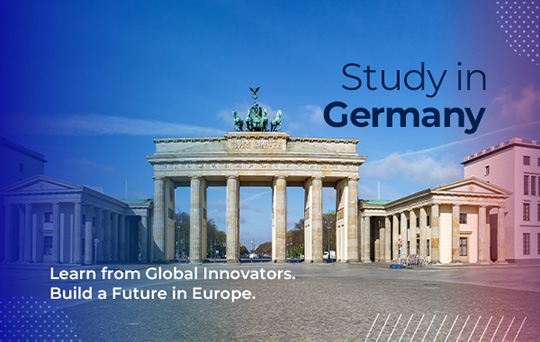
Study in Germany: High-Quality Education & Strong Post-Study Career Pathways (2025 Updates)
Germany is one of the world’s leading destinations for international students, attracting more than 400,000 students annually. Known for its outstanding universities, minimal tuition fees, and close integration with global industries, Germany offers an excellent blend of academic excellence and career opportunity.
As the largest economy in Europe, Germany provides a strong job market, advanced research ecosystems, and direct access to innovative sectors such as engineering, IT, manufacturing, energy, and healthcare. With high living standards, cultural diversity, and a central European location, Germany remains a top choice for international students who want quality education and long-term career growth.
Talk to a Study Expert- Direct representation
- Representation through channel partners



Request Information
Post-Study Work Opportunities in Germany
Germany provides multiple pathways for graduates to stay, work, and build their careers after completing their studies.
18-Month Job-Search Residence Permit
Employment Permit & EU Blue Card (2025 Requirements)
Student Work Rights During Studies
Digital Applications (Available from April 2025)
Switching From Student to Employment or Training
Family Reunion Visa (Dependents)
During Studies
Dependents generally cannot accompany international students unless strict financial and housing requirements are met. This is rare.
After Graduation
Dependents may join once the graduate:
- Secures a Work Permit or
- Receives an EU Blue Card
Key Requirements
- Spouses may need A1-level German.
- Spouses arriving on a Family Reunion Visa can typically work without restrictions.

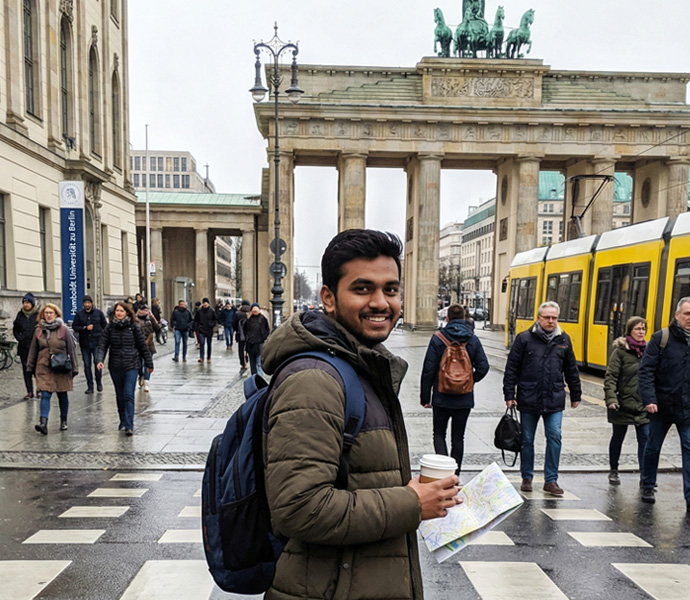
Advantages of Staying in Germany After Graduation
- Strong demand for skilled professionals
- Competitive salaries and robust social benefits
- Clear pathways to Permanent Residency and Citizenship
- Access to job markets across the European Union
- Global exposure in research, engineering, technology, and STEM-focused industries
Germany’s combination of education quality and employment opportunities makes it one of the best countries for long-term career development.
Key 2025 Highlights at a Glance
- 18 months to find employment after graduation
- Online applications for major residence permits
- Increased student work hours (140 full days / 280 half days / 20 hours per week)
- Smooth transition from student permit to skilled worker permit
- Multiple post-study routes:
- Job-Seeker Residence Permit
- Opportunity Card (Chancenkarte)
- EU Blue Card - Permanent residency possible in 33 months, or 21 months with B1 German

Practical Tips & FAQs
- Introduced in 2024
- Points-based system based on qualifications, work experience, German/English proficiency
- Allows non-EU graduates to search for jobs for up to 1 year
Mandatory throughout studies, job-search periods, and employment.
- Permanent residency after 33 months on Blue Card
- After 21 months with B1 German
- Citizenship typically possible after 8 years, or 6 years with advanced integration
- Berlin, Munich, Frankfurt, Hamburg: Strong in IT, tech startups, finance, R&D
- Smaller cities: High demand for engineering, automotive, and manufacturing roles
English-speaking jobs exist (especially in tech), but German proficiency significantly boosts career opportunities and residency prospects.
If no skilled job is secured within the 18-month period, graduates must leave Germany.
Early job search planning and use of university career services are strongly recommended.