
MSc Conservation Science
Develop interdisciplinary solutions needed to tackle the global biodiversity crisis. Understand the issues we face when conserving natural habitats and ecosystems upon which human communities depend. Become a member of the Durrell Institute of Conservation and Ecology (DICE), which in 2019 received the highly prestigious Queen’s Anniversary Prize for Higher and Further Education for its world-leading research and training in conservation science. On our MSc programme, which is delivered by DICE staff, you will collaborate with world-leading conservation scientists and gain the knowledge, skills and practical experience needed for a successful career in conservation.
You will gain an interdisciplinary perspective on conservation issues, drawing on over 30 years of DICE expertise on what it takes for effective conservation management. You will receive state-of-the-art training across the full breadth of conservation disciplines, learning the approaches needed where local communities also rely on natural resource use, as well as the skills needed to restore threatened species and habitats. You will gain practical and methodological tools you will need to achieve success as a conservation scientist who can operate across the natural and social sciences.
Our Conservation Science MSc course reflects your interests, with the option to take our 'Conservation Biology' pathway depending on the modules you take - meaning your Master's will represent your interests and specialism.
Why study Conservation Science at Kent?
Learn from DICE staff, all of whom have practical conservation experience from around the world and have published internationally excellent research (we are ranked first in the UK for our research publications).
Conduct fieldwork anywhere in the world or use outstanding facilities on-campus for your research project, including modern laboratories in molecular genetics and wildlife ecology and the DICE field site to support your research.
Learn outside the classroom with a residential field course at the Durrell Conservation Academy, based at the Durrell Wildlife Conservation Trust, Jersey, and gain insight into cutting-edge population recovery techniques.
Build your professional network by becoming part of the global DICE alumni network that includes award-winning conservation scientists and practitioners from over 100 countries.
You’ll have an opportunity to focus your research project on one of DICE’s many long-term research programmes in the UK or overseas. Watch a brief documentary about one of DICE’s long-term research programmes to help conserve the threatened echo parakeet on Mauritius.
The School of Anthropology and Conservation provides a rich postgraduate learning environment that spans conservation, geography and anthropology, and perfectly reflects the DICE mission of focusing on applied conservation that breaks down the barriers between the natural and social sciences.
About The Durrell Institute of Conservation and Ecology (DICE)
DICE is Britain’s leading research centre dedicated to conserving biodiversity and the ecological processes that support ecosystems and people. It pursues innovative and cutting-edge research to develop the knowledge that underpins conservation, and sets itself apart from more traditionally-minded academic institutions with its clear aims to:
Break down the barriers between the natural and social sciences in conservation
Conduct research that informs and improves policy and practice in all relevant sectors
Disseminate knowledge and provide expertise on conservation issues to stakeholders
Build capacity in the conservation sector through research-led teaching and training
Strive for sustainable livelihoods and biodiversity conservation that benefits people
Our staff have outstanding international research profiles, yet integrate this with considerable on-the-ground experience working with conservation agencies around the world. This combination of expertise ensures that our MSc programme delivers the skills and knowledge that are essential components of conservation science and practice.
Campus Information
Canterbury
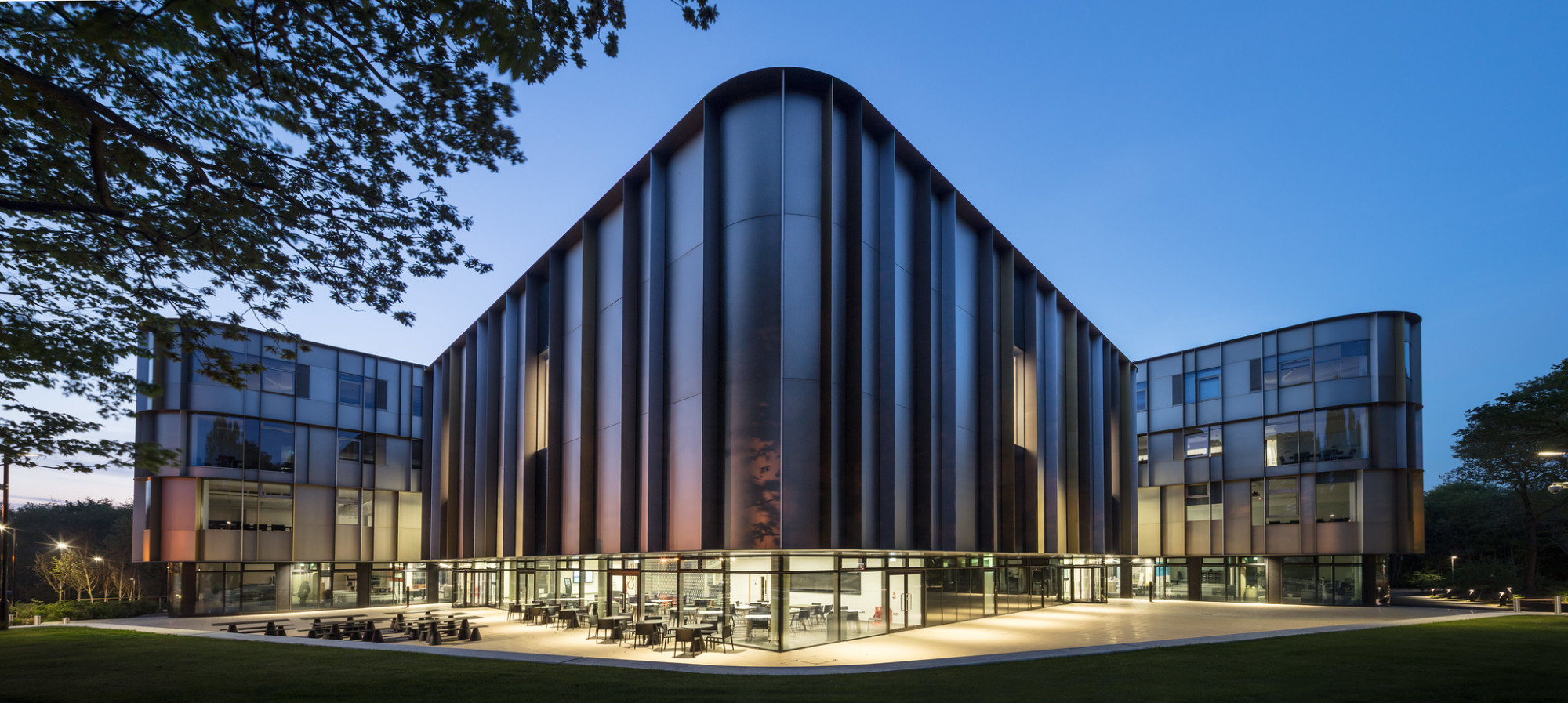
Our campus is surrounded by beautiful woodlands and overlooks the charming city of Canterbury. We have excellent transport links on campus or you can stroll into town on foot.
Intakes
- Jan
- Sep
Application Processing Time in Days: 30
Minimum English Language Requirements
| English Level Description | IELTS (1.0 -9.0) | TOEFL IBT (0-120) | TOEFL CBT (0-300) | PTE (10-90) | |
|---|---|---|---|---|---|
| Expert | 9 | 120 | 297-300 | 86-90 | |
| Very Good | 8.5 | 115-119 | 280-293 | 83-86 | |
| Very Good | 8 | 110-114 | 270-280 | 79-83 | |
| Good | 7.5 | 102-109 | 253-267 | 73-79 | |
| Good | 7 | 94-101 | 240-253 | 65-73 | |
| Competent | 6.5 | 79-93 | 213-233 | 58-65 | |
| Competent | 6 | 60-78 | 170-210 | 50-58 | |
| Modest | 5.5 | 46-59 | 133-210 | 43-50 | |
| Modest | 5 | 35-45 | 107-133 | 36-43 | |
| Limited | 4 | 32-34 | 97-103 | 30-36 | |
| Extremely Limited | < 4 | < 31 | < 93 | < 30 |
Job Opportunity Potential
In these appointments, you will have up to 45 minutes to talk to a careers adviser about whatever career-related topic is important to you. Topics of conversation could include:
- I have no idea what I want to do after I graduate, what are my options?
- What jobs can I get with my degree?
- How do my skills fit in the labour market?
- I’m interested in taking a gap year after I graduate and I want to plan something employers will value.
- I’m thinking of leaving/changing my course and want to talk through the pros and cons.
- I’m interested in doing a masters or PhD, what are my options?
- I’m not sure how to disclose sensitive information to an employer.
A guidance interview is:
Impartial
A careers adviser will not recommend one route to you over another. They are there to help you explore the options objectively.
Challenging
Careers advisers may question your goals and help you to look at the disadvantages as well as the advantages. This is not to put you off, but to help ensure you have thought it through.
Supportive
The meetings are very informal and relaxed. Careers advisers are there to help you discuss things in a safe environment.
Part of a process
Career choice is a process not an event. A guidance interview is a good starting point but you will need to do further research and continuously update your action plan.
PSW Opportunity
- 2 Years PSW is applicable after completing a minimum duration of 9 months course (like- Undergraduate, Postgraduate Level)
- 3 Years PSW is applicable after completing PhD level courses.
Admission Requirement / Eligibility Criteria
For entry to a Kent postgraduate degree programme (Master’s), Indian students typically need to have completed a three or four-year undergraduate degree (Honours Bachelor degree or Professional degree) at an accredited university or college. General Bachelor degrees may sometimes be considered. Exact requirements will depend on the postgraduate degree you are applying for and the institution you have studied at.
For programmes that require a 2:1 we usually ask for a First Class degree, a final CGPA of 6.0/10, or 60%. Students from top institutions may be considered with a high Second Class degree, a final CGPA of 5.5/10, or 55%.
For programmes that require a 2:2 we usually ask for a high Second Class degree, a final CGPA of 5.5/10, or 55%
Some, but not all, postgraduate programmes require your undergraduate degree to have a related major. Some postgraduate programmes may require work experience in a relevant field or at a certain level.
General postgraduate programmes
IELTS (including IELTS Indicator)
6.5 overall (with a minimum of 6.0 in R&W; 5.5 in S&L)
PTE Academic
62 overall with 60 in each subtest
CAE/CPE
176 overall (with a minimum of 169 in R&W; 162 in S&L)
TOEFL iBT
90 overall (with a minimum of 22 in R; 21 in W; 17 in L; 20 in S)
- Course Type: Full Time
- Course Level: Masters/PG Degree
- Duration: 01 Year
-
Total Tuition Fee:
23900 GBP
Average Cost of Living: 13632 GBP /year
Application Fee: N/A
Similar Programs
- MSc Healthcare Management with Industrial Placement at University of Kent
- MSc Forensic Psychology at University of Kent
- MSc Data Science with an Industrial Placement at University of Kent
- MSc Data Science at University of Kent
- MSc Computer Science with an Industrial Placement at University of Kent
- MSc Computer Science (Cyber Security) with an Industrial Placement at University of Kent